AI in Business: Should We Work With AI or Let AI Run the Business
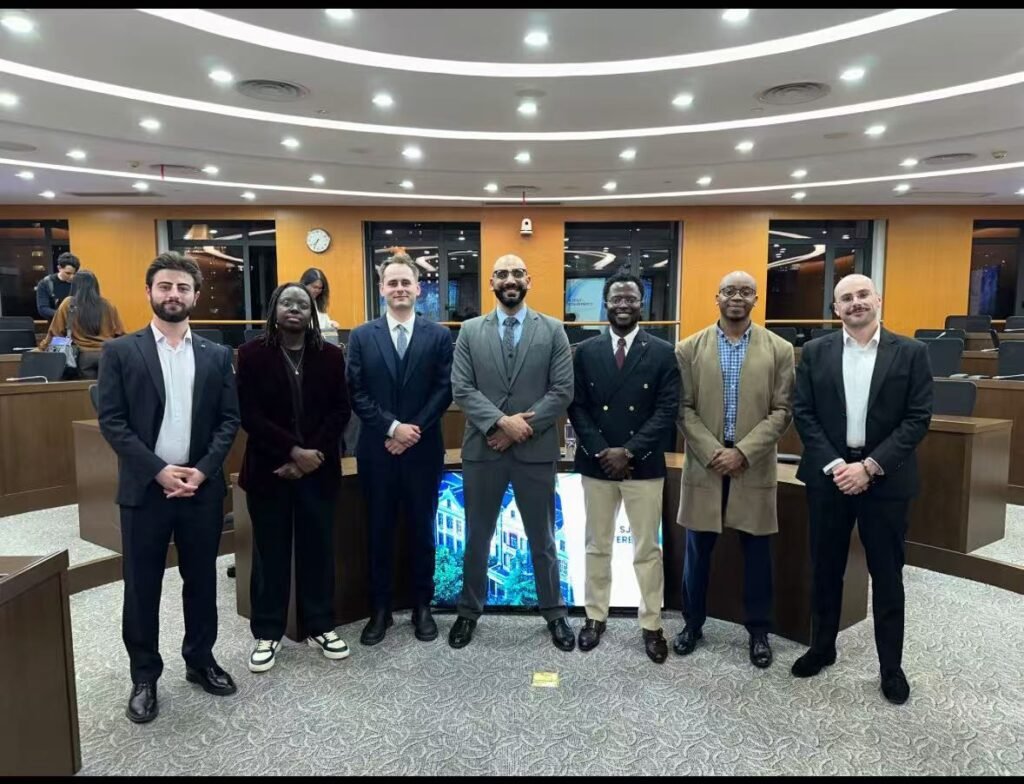
B.A.B.U. Invited to Speak at the SJTU AI Conference at Shanghai Jiaotong University Antai College AI can write the email. It can analyse the data. It can generate ideas, summarise research, and increasingly automate entire workflows. But should we let it make the decisions too? That was one of the questions at the heart of the SJTU AI Conference, where B.A.B.U was invited as a guest speaker for a round-table discussion at the Antai College of Economics and Management at Shanghai Jiao Tong University on April 20th, 2026. Organised by the Silk Road Networking Society, the conference brought together entrepreneurs, technology founders, academics, and professionals exploring how artificial intelligence is changing the way we work. For B.A.B.U, our perspective was slightly different. We were not an AI company, nor were we heavily dependent on AI systems in our operations at the time. While other panellists could speak from the experience of building and implementing AI solutions, we approached the conversation from the perspective of a business asking a more fundamental question: Where does AI genuinely add value, and where does the human element still matter? Why This Conversation Matters in China The discussion was particularly relevant given the direction China has been taking with artificial intelligence. AI is not simply being treated as another emerging technology. China has been actively promoting the integration of AI across industries through its national “AI Plus” initiative, covering areas including science, industry, education, healthcare, consumption, governance, and global cooperation. The national policy also calls for the development of new AI-native enterprises and business models. Shanghai has positioned itself at the centre of that movement. The city’s “Model Shaping Shanghai” initiative aims to build a world-class AI industry cluster while accelerating applications across sectors such as finance, manufacturing, education, healthcare, tourism, and urban governance. Shanghai has also introduced measures aimed at lowering the cost of entrepreneurship and supporting AI startups through funding, infrastructure, computing resources, and innovation platforms. The scale of the ecosystem is already significant. Shanghai’s AI industry was estimated to have exceeded RMB 550 billion in 2025, with the city introducing initiatives such as computing power, model, and data subsidies to help AI startups develop. And perhaps one of the clearest examples of where this is heading is the rise of the One-Person Company, or OPC. The idea is simple: an entrepreneur can use AI tools to perform functions that would traditionally require a much larger team. Shanghai has begun developing dedicated OPC communities and support programs, including initiatives designed around “OPC + AI + overseas markets.” This represents a fascinating shift. AI is no longer only helping companies become more efficient. It is beginning to change what a company can look like in the first place. Beyond the AI Boom There is no question that AI is transforming business. Companies are using it for marketing, customer service, research, data analysis, content creation, software development, and administration. Universities and students are using it for research, writing, translation, learning, and information processing. The attraction is obvious. AI can process enormous amounts of information, automate repetitive tasks, and help people work faster. But faster does not always mean better. A system can produce an answer in seconds and still misunderstand the problem. That distinction becomes particularly important when businesses are dealing with people. What Should We Actually Give to AI? Rather than asking whether businesses should use AI, perhaps we should ask what AI should be responsible for. There are tasks where AI makes obvious sense. It can process large amounts of information. It can identify patterns. It can automate repetitive work. It can help employees generate ideas or complete tasks more efficiently. But there are other areas where human judgment remains difficult to replace. Understanding a client’s concerns. Building trust with a partner. Making a decision when the information is incomplete. Understanding cultural differences. Taking responsibility when something goes wrong. These are not simply technical problems. They are human ones. At B.A.B.U, this distinction is particularly relevant to our work across international education, business, and cross-border collaboration. Technology can help us work faster, but our work ultimately involves people navigating unfamiliar systems, cultures, and opportunities. AI can provide information. People provide context. The Question for Education The same debate is unfolding in universities. If AI can write an essay, summarise hundreds of papers, translate languages, and answer questions instantly, what should students actually be learning? We do not believe the answer is to simply reject AI. Instead, education may need to place even greater emphasis on critical thinking, creativity, problem-solving, research judgment, and the ability to ask the right questions. AI can provide an answer. Education should teach us how to determine whether that answer is actually worth trusting. A Hybrid Future Our position at the conference was not that businesses should avoid AI. Quite the opposite. We believe businesses should work alongside AI rather than completely hand themselves over to it. The most effective model may ultimately be a hybrid one. Let AI handle what it does well. Let people handle what requires judgment, empathy, creativity, relationships, and accountability. If AI saves an employee five hours of repetitive work, the goal should not simply be to eliminate those five hours of human involvement. The goal should be to use those five hours for something more valuable. More time with customers. More time developing ideas. More time solving problems. More time building relationships. AI should remove unnecessary friction, not remove the human element. What We Took Away From Shanghai Jiao Tong University Being invited to speak at the SJTU AI Conference allowed B.A.B.U to participate in a much broader conversation about where business and education are heading. It also reinforced something we have seen throughout our work: meaningful progress often happens when different perspectives come together. We would like to sincerely thank the Silk Road Networking Society, the SJTU AI Conference organisers, and Shanghai Jiao Tong University for inviting B.A.B.U to be part of the discussion. The AI conversation is only beginning. Businesses